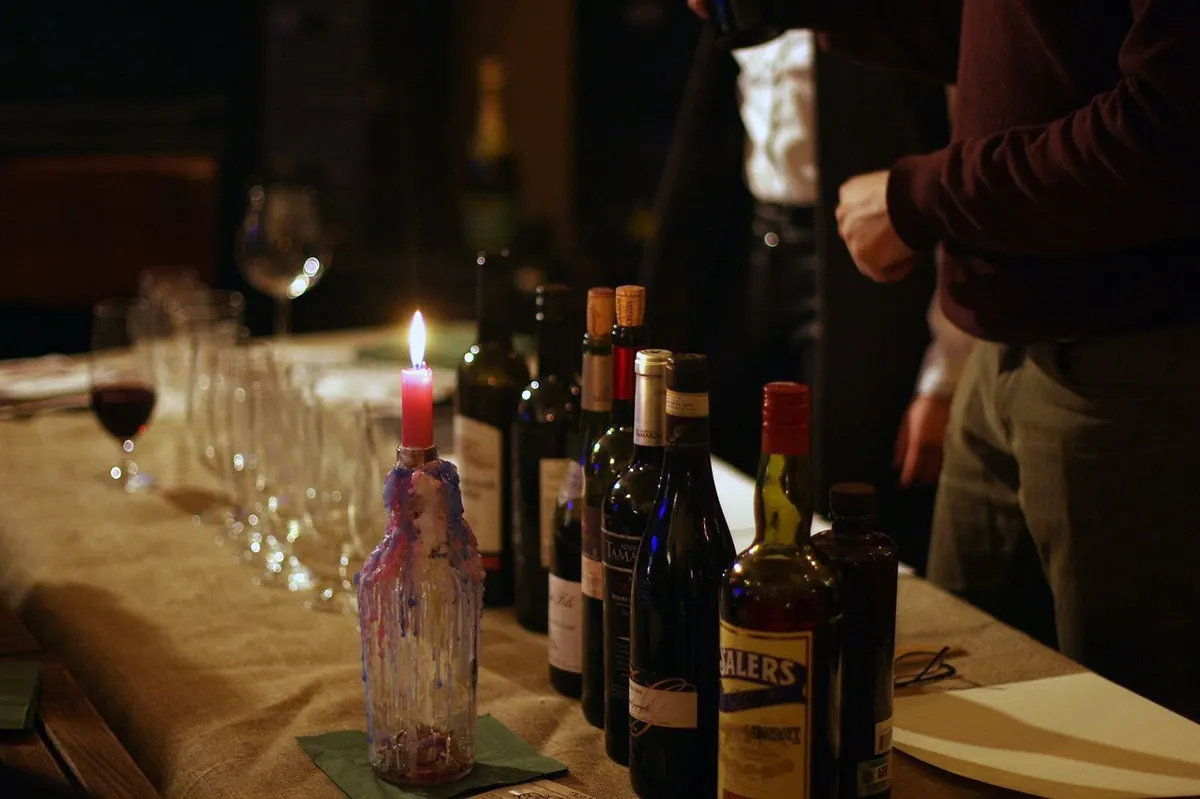
A small wine tasting at home works best when it feels like a long dinner with a purpose, not a formal class. Six to eight friends, five or six bottles, a table with glasses and water, and a loose plan are enough. The secret is preparing the boring parts in advance—chilling, opening, pouring, and timing—so that you can sit down and taste with everyone else.
Choose a theme before you choose bottles. A theme gives the evening a spine and makes comparison easier. For a small group, “Italy in six glasses” is generous: a sparkling white, a crisp white, a light red, a medium red, a fuller red, and a sweet wine to finish. Or compare one grape across three regions—Sangiovese from Chianti Classico, Rosso di Montalcino, and Morellino di Scansano, for example—then add two whites as a warm-up. Avoid themes that require a hunt through specialist shops. You want wines you can buy without stress and replace if a bottle is corked.
More bottles do not make a better tasting. Five wines is plenty for a two-hour evening; six is generous. A focused lineup lets you revisit a glass, compare notes, and still remember what you drank. If you want a finale, make it a small pour of something sweet rather than a seventh dry wine.
Write the list in tasting order: lightest to fullest, dry to sweet. A 750 ml bottle gives roughly twelve 2-ounce pours, so one bottle covers six guests comfortably with a little left for a second look. Buy one extra bottle of the wine you expect to be the favourite and keep it closed until you see how the evening is going. For six guests and five wines, five bottles plus one spare is a sensible starting point; if your friends are serious tasters, add a second bottle of the first white or the final red.
Before you shop, ask about strong dislikes and food allergies—not to build a different list for every guest, but to avoid a bottle nobody will touch. Keep the receipt if your local shop allows returns on unopened bottles. And do not overlook the non-wine shopping: water, plain bread or crackers, a lemon or two, and something simple for the table.
You do not need matching crystal. You need enough glasses and a clear surface. Two wine glasses per guest is ideal: one for whites and one for reds, plus water glasses. If you are short, one wine glass per person works if guests rinse with water between wines—workable, though not ideal. Avoid scented candles, strong room sprays, and heavy perfume in the tasting room; they interfere with smell more than most hosts expect.
Set a station at one end of the table or on a sideboard. Before guests arrive, open the reds, chill the whites, and remove foil from every bottle so you are not wrestling with corks while people wait. Put out a printed list with the wines in order, a pen, napkins, water pitchers, bread or plain crackers, and a dump bucket lined with a bag. A plain white tablecloth or sheet of white paper under the glasses helps everyone see the wine’s colour.
Two hours is a comfortable frame for five or six wines. Build in a late-arrival buffer and keep the first glass easy. A sample timeline:
If dinner follows, keep the tasting to four wines. If the tasting is the event, five or six small pours with food afterward is plenty. The clock should feel like a guide, not a schedule.
Small pours are the host’s best friend. One and a half to two ounces is enough to look, smell, taste, and come back for a second impression. Pour the first wine for yourself, check it, then serve guests around the table, leaving your own glass until last. Keep the bottle on the table or sideboard so people can revisit, but do not top up every glass the moment it empties—guests need a clean glass and a little time between wines.
Instead of a lecture, give the table a simple prompt: What do you notice first? Does it change after a minute? Would you buy it? Those three questions work for beginners and for friends who know more than they let on. Encourage spitting into the dump bucket; it is normal at a tasting and keeps the evening relaxed. Water is always available, and nobody should feel obliged to finish a wine they dislike.
If you want to say something about the wine, keep it short: where it comes from, the grape, and why you chose it. Then let the table talk. A host who asks good questions is more useful than a host who recites tasting notes.
Food should steady the palate, not compete with the bottles. Set out plain bread, grissini, olives, thin slices of salami, a mild cheese, roasted nuts, and perhaps a simple tomato bruschetta. Avoid dishes with vinegar, hot chilli, or heavy garlic before the reds; they can make wine taste harsh. Keep portions small and put food out after the first two wines or in little plates around the table. If you serve cheese, choose two or three at most and let guests help themselves.
Do a quiet final check: whites in the fridge, reds open, glasses counted, water filled, dump bucket out, list printed, music low, candles unscented. Then stop fiddling. The point of a home tasting is not a flawless performance; it is a table of friends paying attention to what is in the glass. If one wine disappoints, say so, move on, and open the spare. The best tastings are the ones where the host sits down with a glass and a pen—and enjoys the evening too.
Photo: klizma-e-buka0 / Pixabay
A cantina is more than a wine cellar: it shapes how Italians store, choose, serve and share wine, from restaurant...
A practical guide to Italian restaurant customs — from course order and bread baskets to coffee timing and tipping —...
From grape-stomping parades to porchetta stalls and pour-by-pour etiquette, here is what actually happens at an...

Wine, food, and street-side cellar culture.
