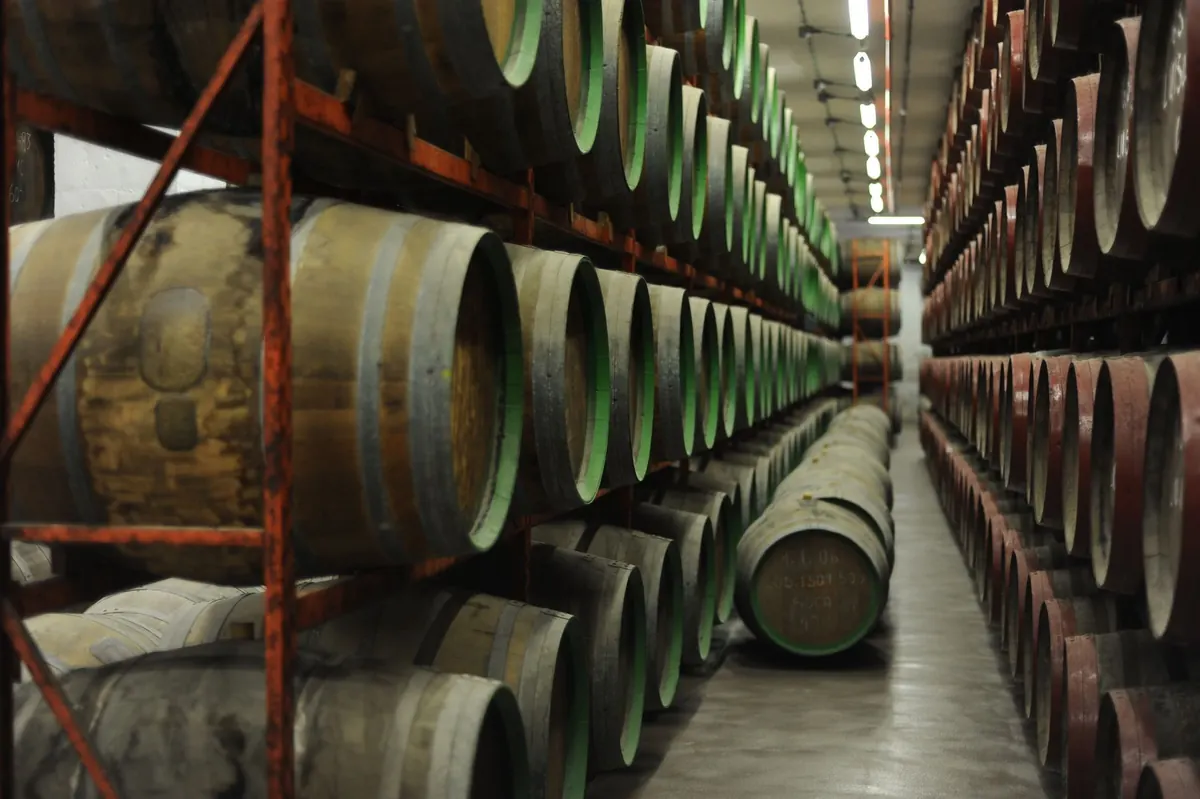
A cantina is easy to miss. In a small Italian town it may be a low doorway off a piazza, a flight of stairs behind a trattoria, or a cool room where a restaurant keeps its bottles. The word can mean a cellar, a winery, or a wine bar, but at the table it stands for something more useful: a way of keeping wine close to food and people. Understanding the cantina explains why a bottle is chosen with such care, why house wine is treated as a point of pride, and why a meal often ends with someone suggesting one more glass from downstairs.
In Italian, cantina most often means cellar or winery. A cantina sociale is a cooperative winery where growers pool their grapes and make wine together. In a restaurant, the cantina is both the physical storage space and the wine program behind the list. Menus often label the wine section simply “Cantina,” which tells you that the bottles are part of the restaurant’s identity, not an afterthought.
A cantina is not necessarily grand. It can be a family basement with a few demijohns, a cool cupboard under the stairs, or a temperature-controlled room with rows of wooden cases. Nor is it exactly an enoteca, though the two overlap. An enoteca is usually a wine shop or tasting venue; a cantina is more often a working storage and production space, or the cellar of a restaurant. In everyday use, the boundaries blur. What matters is the relationship between the place, the bottle and the table.
A good cantina is a working room, not a museum. Its first job is to keep wine stable until someone asks for it. That means cool, steady conditions, protection from light, and distance from heat, vibration and strong smells. A boiler room, a sunny shelf above the stove or a cupboard next to cleaning products will undo a wine faster than a few months of waiting ever could.
Practical storage is simpler than many wine displays suggest:
Service is part of the same discipline. A red is not automatically served warm; a white is not automatically served ice-cold. A restaurant cantina works because the person fetching the bottle knows which wine is ready, which needs air, and which should simply be poured into a carafe and put on the table. The cellar is not there to intimidate. It is there to make the next glass taste right.
The cantina has always been a social room as much as a storage room. In wine-growing families, it is where the harvest is talked over, where barrels are tasted, and where friends are taken to see what is developing. In a restaurant, the ritual of being led downstairs to choose a bottle turns a transaction into a conversation. You learn something about the region, the owner’s preferences or the dish you are about to eat.
This social role also explains the enduring place of house wine. A cantina that offers a good vino della casa, perhaps in a carafe or a half-liter bottle, is making a generous statement: wine belongs on the table, not only in a trophy cabinet. The same impulse appears in village festivals, cooperative tastings and long Sunday lunches, where the point is not to impress anyone with the label but to keep the table supplied. The cantina is where wine stops being an object and becomes hospitality.
A restaurant cantina can look daunting, especially when every region seems to have its own grapes and its own vocabulary. Start with what you are eating and where you are. A seafood lunch in Liguria or along the coast makes a case for a crisp white such as Vermentino. A tomato-based pasta or a plate of ragù often sits comfortably with a Sangiovese. A braised meat or a firm cheese can handle something with more structure. These are not rules; they are starting points.
You do not need to spend more to use a cantina well. The best value often comes from regional grapes, lesser-known appellations and bottles the staff are genuinely excited to open. If a list feels too formal, say so. The cantina exists to serve the table, not to test your memory.
Most homes do not have a cellar, and they do not need one. A cool, dark corner away from the kitchen’s heat and the radiator’s dry air can hold a modest supply for everyday drinking. A closet shelf, the bottom of a pantry or a small wine fridge will do. Keep the collection small enough that you can see what you have and drink it before it becomes decoration.
Buy with meals in mind. A few bottles of white for aperitivo and fish, a few reds for pasta and roasts, and one or two bottles you are saving for an occasion will cover more ground than a random mixed case. Store bottles upright for a day or two before serving if they have been lying down, and give older reds time to breathe. If you are unsure about a bottle, open it with food rather than before dinner; the table is the most forgiving place to learn.
Treat the cantina as a place and a habit. Clear one cool corner at home so a bottle is always ready. At a restaurant, ask to see the cellar or ask what the staff would drink with your dish. At the table, serve wine at a sensible temperature and put it within reach of everyone. That is the cantina’s real work: keeping wine close enough to be shared, and making the next meal a little more generous.
Photo: Piotr Grzankowski / Pexels
A practical guide to Italian restaurant customs — from course order and bread baskets to coffee timing and tipping —...
From grape-stomping parades to porchetta stalls and pour-by-pour etiquette, here is what actually happens at an...
A practical guide to hosting a relaxed at-home wine tasting for friends, from choosing five or six bottles and...

Wine, food, and street-side cellar culture.
