A good bottle can be undone in about ninety seconds. Not by a bad cork, and not by anything as dramatic as a spoiled wine — just the small things hosts do on autopilot. A red pulled straight from the fridge shelf. A white left standing on a sunny counter since lunch. A glass filled so generously that there is no room left for the one thing the wine actually needs, which is air.
None of these mistakes costs anything to fix. They simply require a little attention at the moment of serving, which is also the moment when the wine is most likely to be judged. What follows are the errors that show up most often at home tables, and the simple corrections for each.
The most common serving error is a temperature error, and it usually arrives as a pair of opposites at the same table.
Red wine pulled from a refrigerator at about 4°C and poured immediately is a muted thing. The aromatic compounds that make a Nebbiolo or a Côtes du Rhône interesting simply don't lift at that temperature, and the tannin feels more drying than it should, because cold exaggerates that grip while the fruit that ought to balance it goes quiet. You don't need a trained palate to notice. The wine tastes short and slightly hollow, and the guest assumes it's the bottle.
White wine left on the counter for two hours has the reverse problem. At 22°C, a crisp Vermentino turns soft and vaguely sweet, the alcohol shows at the front of the nose, and the finish disappears almost immediately. The wine isn't faulty. It's just being served at the wrong end of its range.
The fix takes almost no effort. Take the red out of storage 30 to 45 minutes before pouring, or run the closed bottle under the warm tap for a couple of minutes if the house is cold. Don't park it on a radiator or in a bowl of hot water — gentle and gradual is the point. For whites, move the bottle to the fridge 90 minutes before the meal rather than leaving it there all afternoon, and take it out 10 or 15 minutes before the first pour. The glass will warm the wine further as it sits in your hand.
"Room temperature" was a reasonable instruction when rooms were cold stone affairs. In a modern kitchen it's usually too warm. Think in ranges rather than rules, and use these as a starting point:
If a red has been sitting in a cool room and feels tight, cup the bowl in your hands for a minute and swirl. If a white is too cold, don't add ice — hold the glass and let it come up. If it's too warm, a couple of minutes in the fridge door, glass and all, is faster than chilling the whole bottle.
A wine glass is not a water tumbler, and the shape exists for a reason. The bowl's job is to hold a pocket of air above the liquid, where aromas collect before your nose reaches them. Fill the glass to the widest point of the bowl — roughly a third full, or a quarter for a large Burgundy glass — and you leave that pocket intact.
Fill it to the rim and three things happen at once. Swirling becomes impossible without spilling. The nose has nowhere to gather, so you smell alcohol and little else. And the wine has no surface area against air, which is exactly what it needs to open up. A wine that seems closed and unfriendly in a full glass often turns generous in a half-empty one, ten minutes later.
The same logic applies to refilling. Topping up a glass that still holds a mouthful or two is a habit borrowed from restaurant service, and it flattens the experience: the wine never gets to develop in the glass, and the guest never gets to taste it change. Wait until the glass is nearly empty.
You don't need a cupboard full of sommelier ranges, but some common habits actively work against the wine.
Soap residue is the big one. Glasses washed in hot soapy water and left to dry often carry a thin film that kills bubbles and dulls aroma. Rinse them in very hot water, dry with a clean lint-free cloth, and skip the dishwashing cycle if you can — the rinse aid and the drying heat both leave their mark.
Storage matters too. Glasses kept upside down on a shelf next to spices, coffee or onions pick up smells that are surprisingly persistent. Keep them somewhere neutral, upright if you have the space, and give them a sniff before pouring if they've been shut in a cupboard for weeks.
And skip the freezer. A frosted glass numbs the first few minutes of a white or a sparkling wine entirely, and condensation gets in the way of the nose. A stem exists to keep your hand's heat off the bowl; use it, rather than holding the glass like a tumbler.
Opening a bottle and leaving it on the counter does very little. The surface area exposed through a narrow neck is tiny, and a wine that "needed to breathe" won't change much in half an hour that way.
Most everyday whites and light reds are perfectly happy poured straight from the bottle. Big, young, tannic reds benefit from a decanter and 30 to 60 minutes. Older wines need a gentler approach: stand the bottle upright for a day or two so the sediment settles, decant slowly over a light source, and serve fairly soon afterwards — long exposure can make a fragile older wine fade rather than improve.
Sparkling wine should go into the fridge well before it's opened, never the reverse. A warm bottle foams up and loses pressure quickly. Chill it properly, then twist the bottle rather than the cork and let it sigh out quietly.
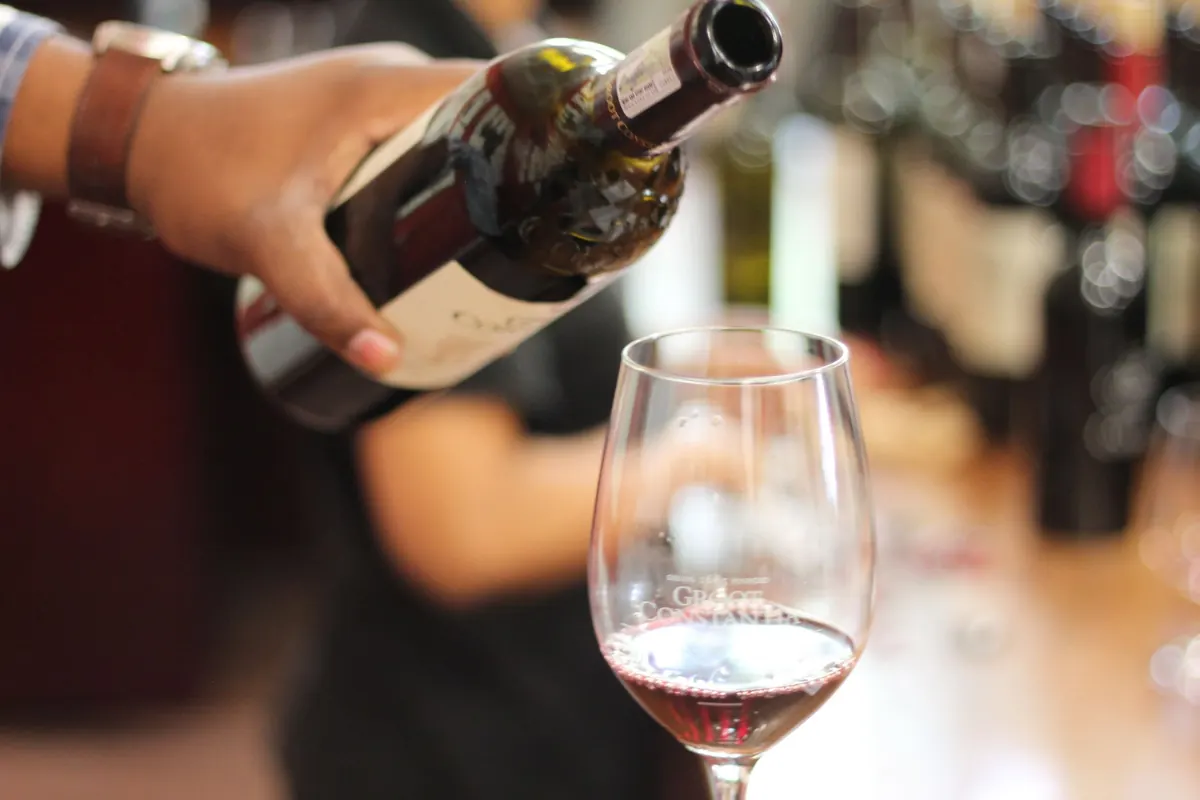
Pour slowly, aim for the widest part of the bowl rather than the bottom, and stop before the glass is full. For sparkling wine, tilt the glass and pour down the side in two stages; you'll keep far more bubbles and far fewer wet tablecloths.
Two final habits worth breaking. First, don't tip the last of one bottle into the remains of another — you lose both wines. Second, if the final pour looks cloudy, leave it. That last centimetre is usually sediment, and no guest has ever been disappointed by it staying in the bottle.
Keep the bottle away from the stove, the radiator and direct sun while you eat. A wine can go from right to wrong over the course of a long dinner simply because of where it was standing.
None of this needs to become a ritual. In practice it comes down to a handful of habits, most of which take less time than opening the bottle.
Get those six right and almost everything else about the evening can be improvised. The wine will taste like the wine, the aromas will arrive before the first sip, and the second glass will be better than the first — which is, after all, the whole point of putting a bottle on the table.
Photo: lebəˈ nēz / Pexels
A cantina is more than a wine cellar: it shapes how Italians store, choose, serve and share wine, from restaurant...
A practical guide to Italian restaurant customs — from course order and bread baskets to coffee timing and tipping —...
From grape-stomping parades to porchetta stalls and pour-by-pour etiquette, here is what actually happens at an...

Wine, food, and street-side cellar culture.