A good cheese board is not a display of everything in the fridge. It is a small, deliberate argument for why the bottle in your hand deserves company. Italian cheese gives you a head start here: the range is enormous, the textures are genuinely different from one another, and much of it was designed to be eaten with wine in the first place. What follows is the order of operations for a board that looks generous, tastes balanced, and does not keep you in the kitchen all evening.
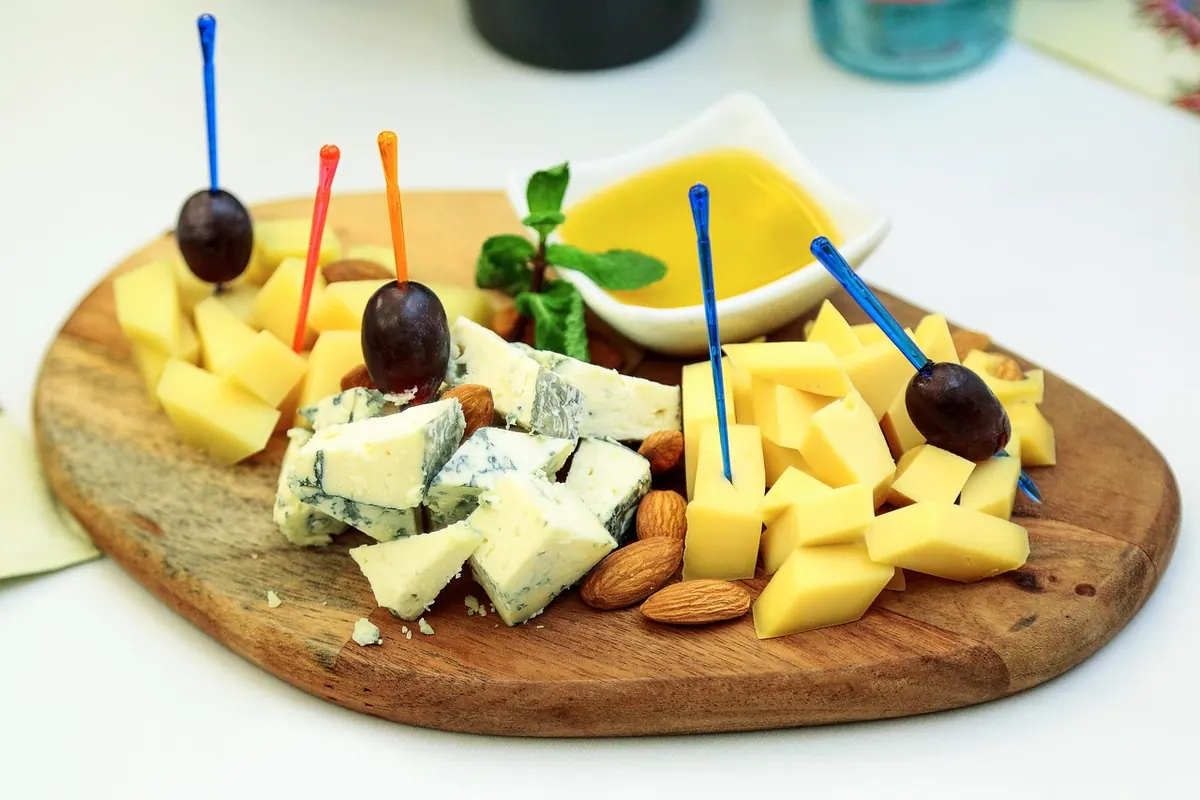
Start with a simple principle. Six cheeses are rarely better than four. Three well-chosen ones are better than five chosen at random. Contrast is what makes a board interesting, not volume, and a plate that offers something milky, something soft, something aged and something blue will keep a table happy for an hour without any of it turning into a pile.
Decide on the cheeses before you leave the house, and think in terms of roles rather than names. That way the shop can be a small neighbourhood deli or a good counter at the market, and you can swap one cheese for another without losing the balance.
For four people, three cheeses will do: one soft, one aged, one blue. For six to eight, stretch to five and keep the strongest one at the end of the board so people reach it last.
Fresh cheeses are the ones most likely to be disappointing, because they are also the ones most sensitive to age. Buy them as close to the evening as you can, and buy less than you think. Ricotta from a counter, still slightly warm and faintly sweet, is a different thing entirely from the tub in the supermarket. Squacquerone should be loose enough to spread on bread; if it is firm, it has been sitting too long.
With aged cheeses, the useful question at the counter is not "which is best" but "which is ready to eat now". A Pecorino Toscano at the right point is nutty and firm without being brittle. Parmigiano Reggiano at 24 months is creamy and bright; at 36 months it becomes drier, saltier, more savoury, and better with a glass of something structured. Buy blocks and cut them yourself. Pre-cut pieces dry out quickly at the edges, and the difference shows on the plate.
Gorgonzola dolce is soft, sweet and almost buttery, and it works with a wide range of wines. Gorgonzola piccante is firmer, spicier, and much more assertive. Choose one, and let it sit slightly apart from the rest so its flavour does not creep into the ricotta.
Plan on roughly 100 grams of cheese per person in total. For six guests and four cheeses, that is about 600 grams altogether, or 150 grams per cheese. It sounds modest. It is almost always enough, particularly if there is bread, cured meat and something sweet on the board.
Take the cheeses out of the refrigerator 30 to 45 minutes before serving. Cold cheese tastes of very little; the aromatics only show themselves at room temperature. Soft and blue cheeses need less time, hard cheeses can take more. If your kitchen is warm, cover them loosely with a clean cloth rather than cling film, which traps moisture and makes the surface sweat.
Cut a few slices before the guests arrive. A whole wedge looks handsome but people hesitate to be the first to attack it. Leave the rinds on: they hold the shape, and on Taleggio and Robiola the rind is part of the pleasure.
The rule here is one of each: something sweet, something crunchy, something salty, something fresh. Anything beyond that is decoration, and decoration that nobody eats.
Skip crackers that taste of nothing and skip anything strongly flavoured enough to compete, such as truffle salami or chilli preserves. They win the argument and the cheese disappears.
A wooden board or a piece of slate, with two or three small bowls, is all the equipment you need. Work in this order:
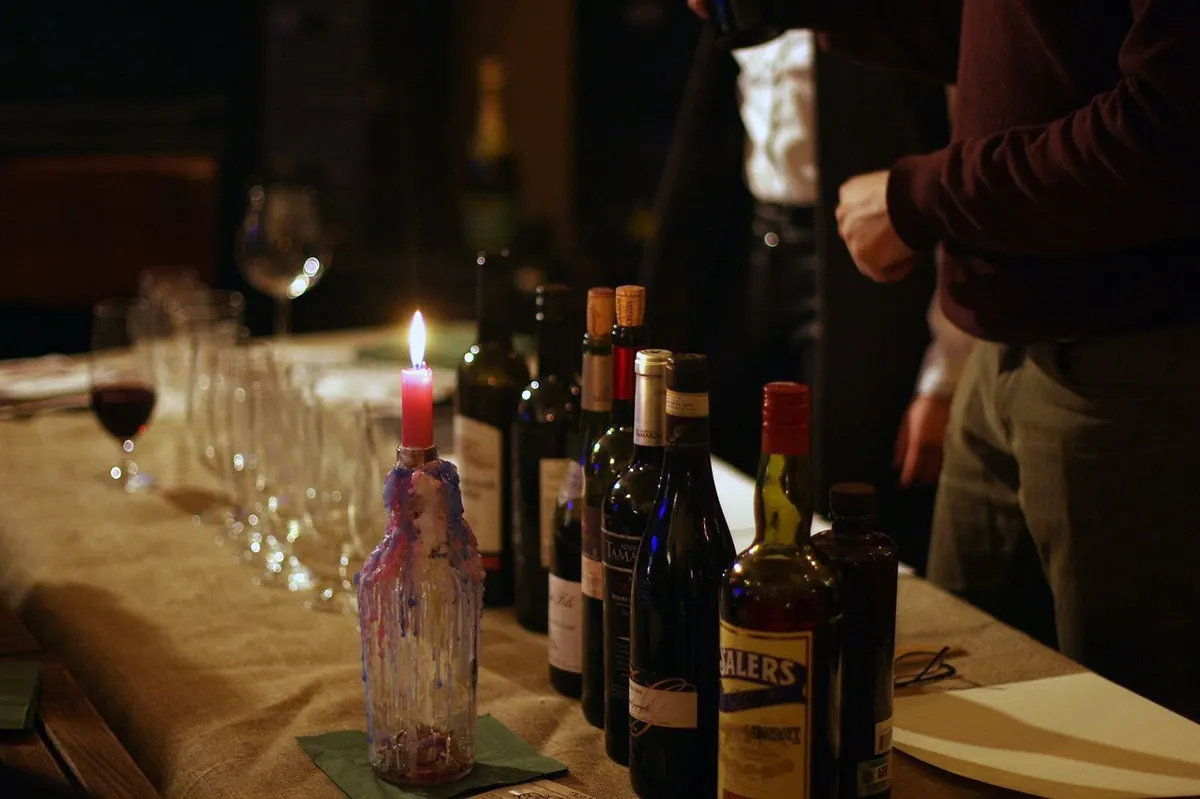
One wine for the whole board is fine, and often better than five half-glasses that nobody finishes. If you want two, choose a white and a red with some acidity, and let the cheese do the rest.
One caution: very tannic reds, Barolo and Brunello among them, tend to clash with soft, creamy cheeses and can taste metallic against them. Pour those with the hard cheeses at the end, or save them for dinner.
Take the cheese out 40 minutes before your guests arrive, and open the wine at the same time. Put the board together an hour ahead if you like, then cover it lightly and leave it on the table. Add the bread and cut the fruit at the last minute. Keep a spare wedge in the fridge, because boards empty faster than anyone predicts. And put out small plates, a few napkins and a jug of water: the details that make people relax are almost never about the food.
Photo: difotolife / Pixabay
A cantina is more than a wine cellar: it shapes how Italians store, choose, serve and share wine, from restaurant...
A practical guide to Italian restaurant customs — from course order and bread baskets to coffee timing and tipping —...

From grape-stomping parades to porchetta stalls and pour-by-pour etiquette, here is what actually happens at an...

Wine, food, and street-side cellar culture.